Keynote Speech Ⅰ
 Danwei Wang
Nanyang Technological University, Singapore
Fellow of SAEng
Brief Introduction: TBD
Speech Title: TBD
Abstract: TBD
Keynote Speech Ⅱ
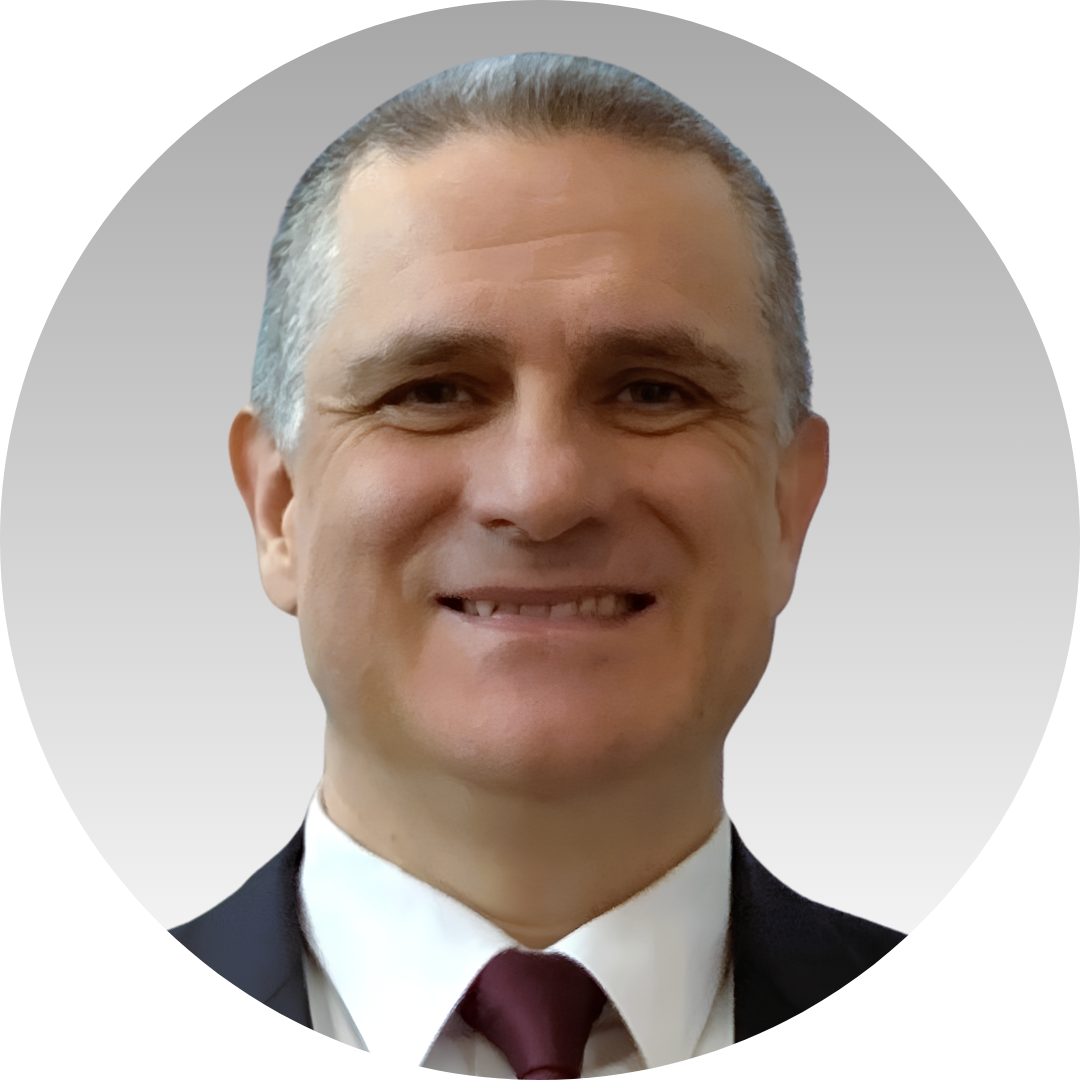 Roberto sabatini
Khalifa University, UAE
Fellow of IEEE, RAeS, RIN, IETI, and IEAust
Brief Introduction: TBD
Speech Title: TBD
Abstract: TBD
Keynote Speech Ⅲ

Zhengyou Zhang
Tencent AI Lab, China
Fellow of IEEE and ACM
Brief Introduction: TBD
Speech Title: TBD
Abstract: TBD
Keynote Speech Ⅳ

Rajiv Ranjan
Newcastle University, UK
Member of AE, Fellow of AAIA and IEEE
Brief Introduction: TBD
Speech Title: TBD
Abstract: TBD
Keynote Speech Ⅴ

Chien Chern
Nanyang Technological University, Singapore
Fellow of IEEE
Brief Introduction: TBD
Speech Title: TBD
Abstract: Embodied artificial intelligence is transforming machines from passive tools into autonomous systems capable of perceiving, reasoning, learning and acting in the physical world. Yet the intelligence of a robot can no longer be understood solely through the models and processors it carries. Dependable autonomy increasingly emerges from a wider ecosystem of sensors, connected infrastructure, edge computing, cloud intelligence and human expertise. This transition raises a fundamental question: how can embodied AI remain responsive, resource-efficient, safe and accountable when both the physical environment and its supporting digital infrastructure are continually changing?
This keynote presents a systems perspective on embodied intelligence, grounded in our foundational research on osmotic computing and subsequent advances in distributed Edge AI. Osmotic computing introduced the principle of dynamically placing and orchestrating application components across the cloud–edge–IoT continuum in response to heterogeneous resources and changing operational demands. Extending this thinking to embodied AI creates new opportunities to coordinate perception, model inference, planning and learning across robots, nearby edge infrastructure and the cloud. Instead of assuming that all intelligence must reside onboard or in a remote data centre, the question becomes which capabilities should execute where, when and under what constraints.
I will explore three interconnected research challenges. First, adaptive intelligence: how sensing rates, computational workloads and communication patterns can respond to environmental change, uncertainty, energy availability and strict real-time deadlines. Second, resilience and cybersecurity: how embodied systems can continue to operate when networks degrade, computing resources become constrained or data and AI services are exposed to cyber disturbances. Third, assurance and human oversight: how explanations, structured domain knowledge, monitoring and safety constraints can make autonomous decisions inspectable and contestable, ensuring that people retain the competence and authority to intervene when necessary.
Illustrative scenarios spanning mobile robotics, autonomous systems and intelligent infrastructure will show why these challenges must be treated jointly. A service migration that saves energy may increase latency; centralised reasoning may improve global coordination yet create a connectivity dependency; more frequent sensing may improve situational awareness while overloading communication and inference pipelines. Addressing such trade-offs requires safety-aware orchestration, explicit operational boundaries and evidence that adaptation preserves acceptable behaviour rather than merely improving average performance.
Drawing on the research agenda of the UK National Edge AI Hub and Newcastle University Centre for AI Safety, the keynote will set out a vision for safe and adaptive embodied intelligence across the Edge–Cloud continuum. The central proposition is that the next frontier is not simply to build smarter robots, but to engineer distributed intelligence ecosystems that remain dependable, understandable and governable as their operating conditions evolve.